REFUGIUM LUNZ: At the church square of time
A centuries-old guesthouse on the church square of Lunz, thoughtfully restored and brought back to life, looking forward while honoring its history.
A number with history
1661 is not only a palindrome that reads the same forwards and backwards. It is also the year carved into an old wooden beam, associated with the origin of Refugium Lunz – or at least the oldest recorded date proving its existence.
A place of encounter
Its owners changed often, its purpose rarely. It was and still is a place for guests. A place of hospitality. A place of encounter.
From trade stop to retreat
Provision carriers once ensured that traders traveling along the former iron route were supplied with food in this house next to the church. In return, they received iron for tools and nails. From this simple concept of hospitality, a new idea emerged at the end of the 19th century: people no longer came to work or pass through – they came to stay.
Silence and rediscovery
Then, for a long time, the house on the church square of Lunz am See fell silent. Almost too silent.
Until Joachim and Heinz saw something in the abandoned house one winter night in 2019.
Something that had never truly disappeared. And they had an idea of how to bring what remained back to life.
A new chapter
Together with partners from their own cooperative FORMDEPOT, they created a special place – a refuge that looks to the future without forgetting the history of this unique location.
Architecture tells stories
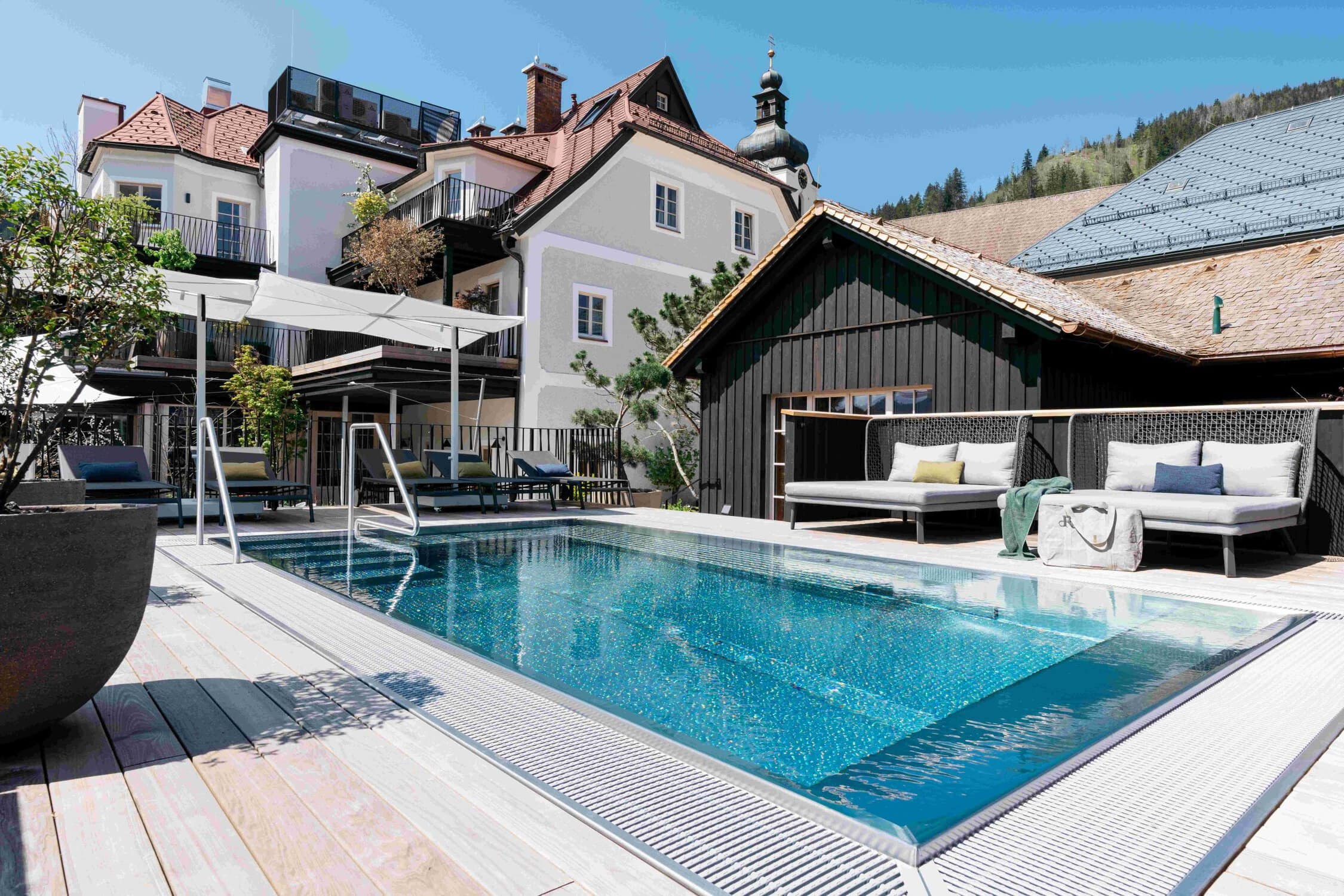
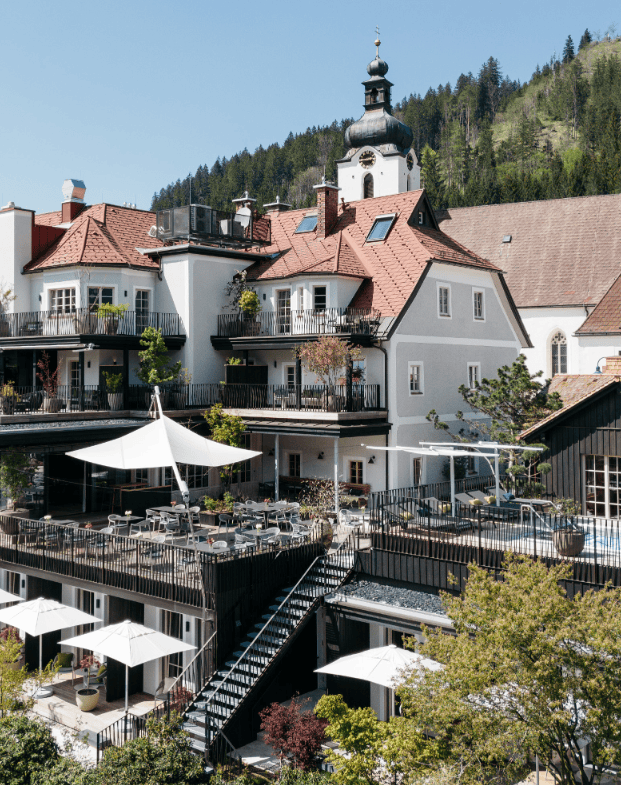
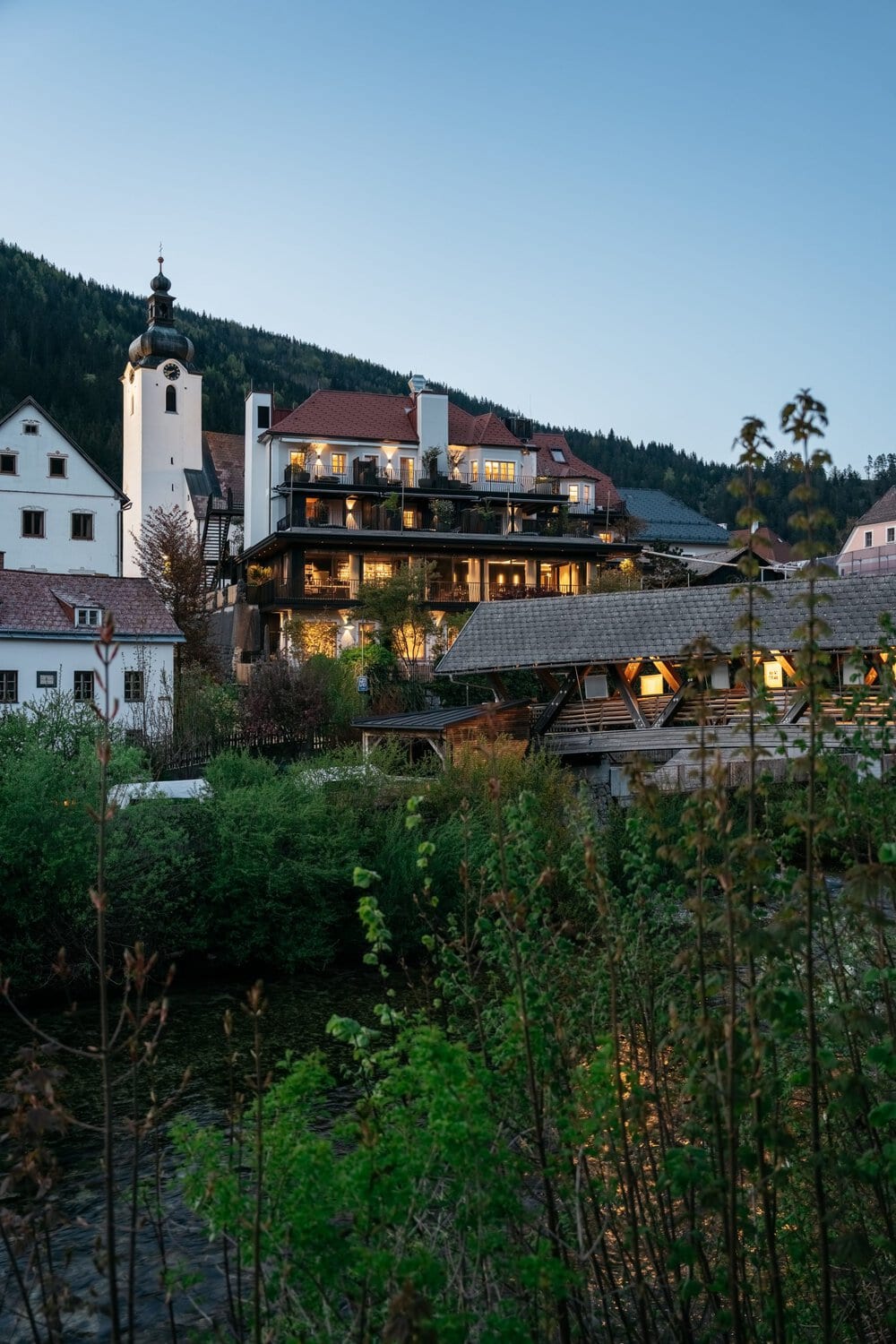
Even the walk across the old bridge lets glimpses of the past reappear. The view of the house, with its different layers and façades, tells of how new elements were added over time. Like a loyal companion, it has stood for centuries between the picturesque village church and the green shimmering Ybbs river.
An open meeting place
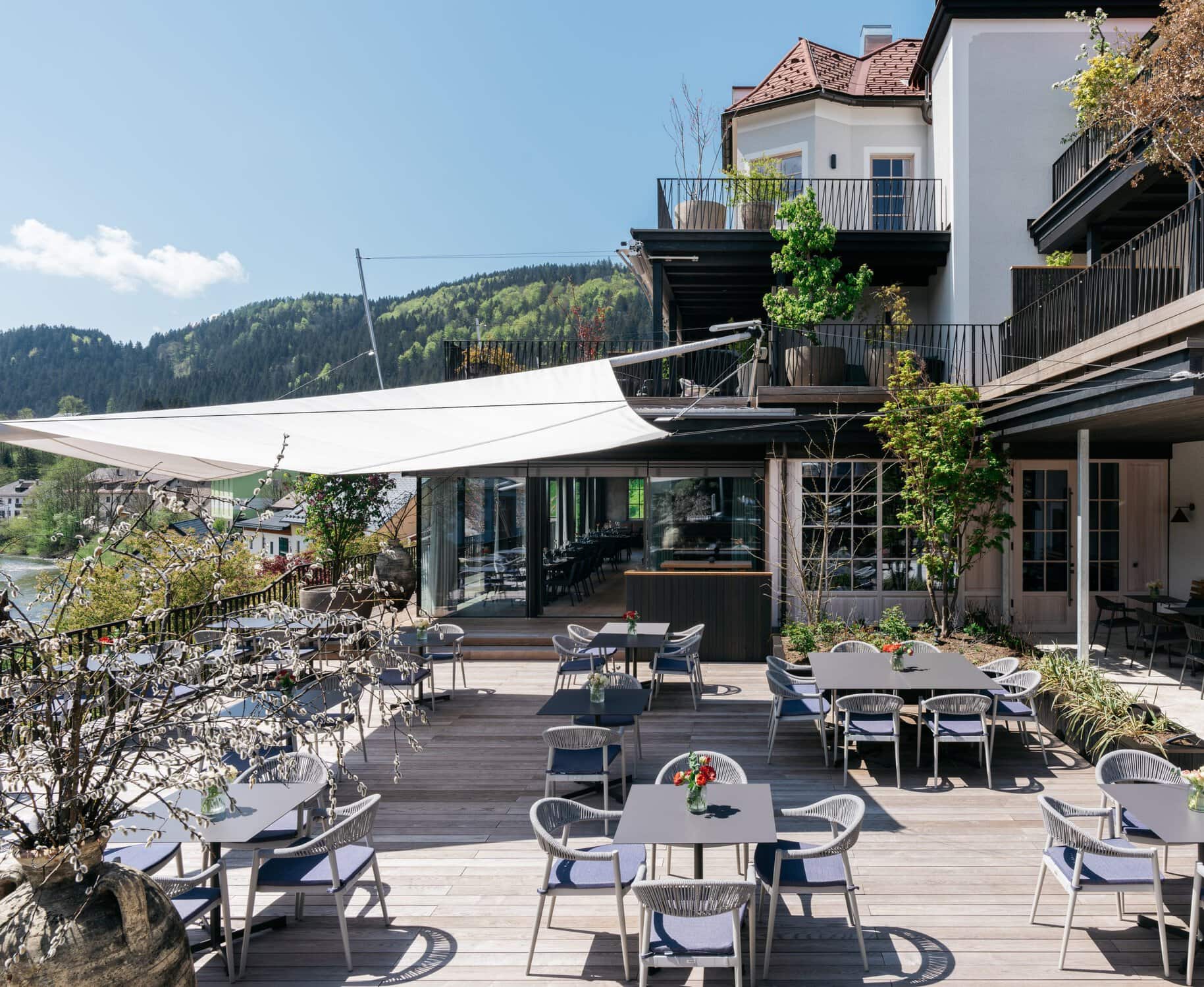
As a central location, the refugium was deliberately opened towards the church square to serve not only guests but also passersby and locals as an inviting meeting point.
Traces of the past
Who might have heard the bells here over the years and let their gaze wander across the water?
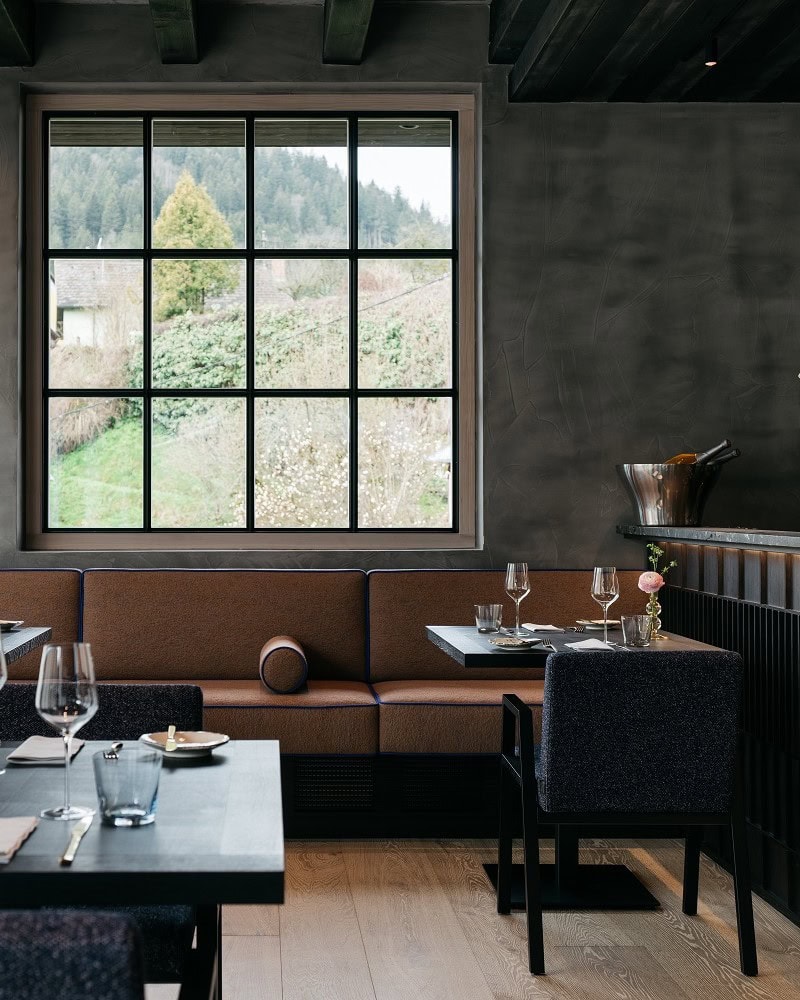
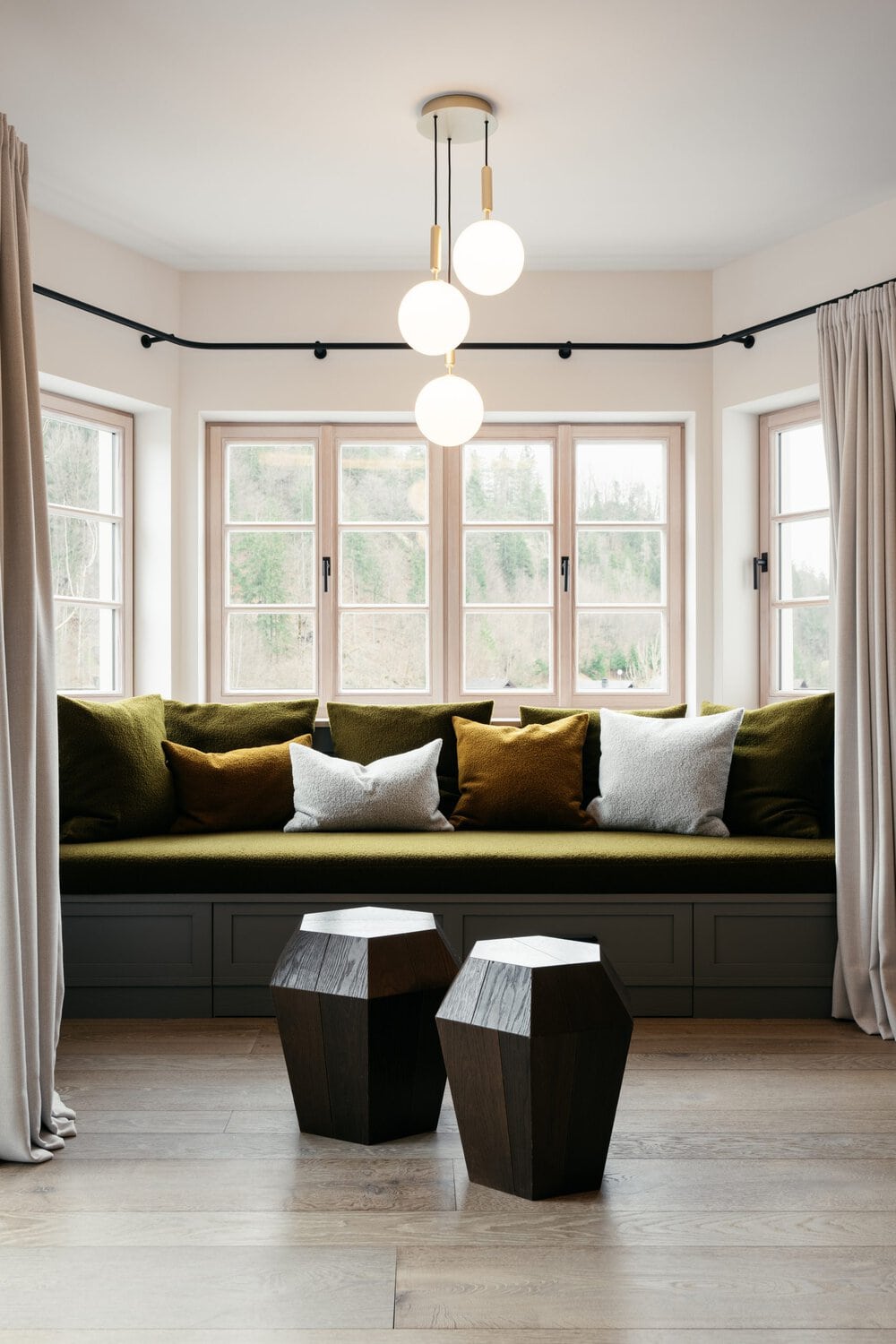
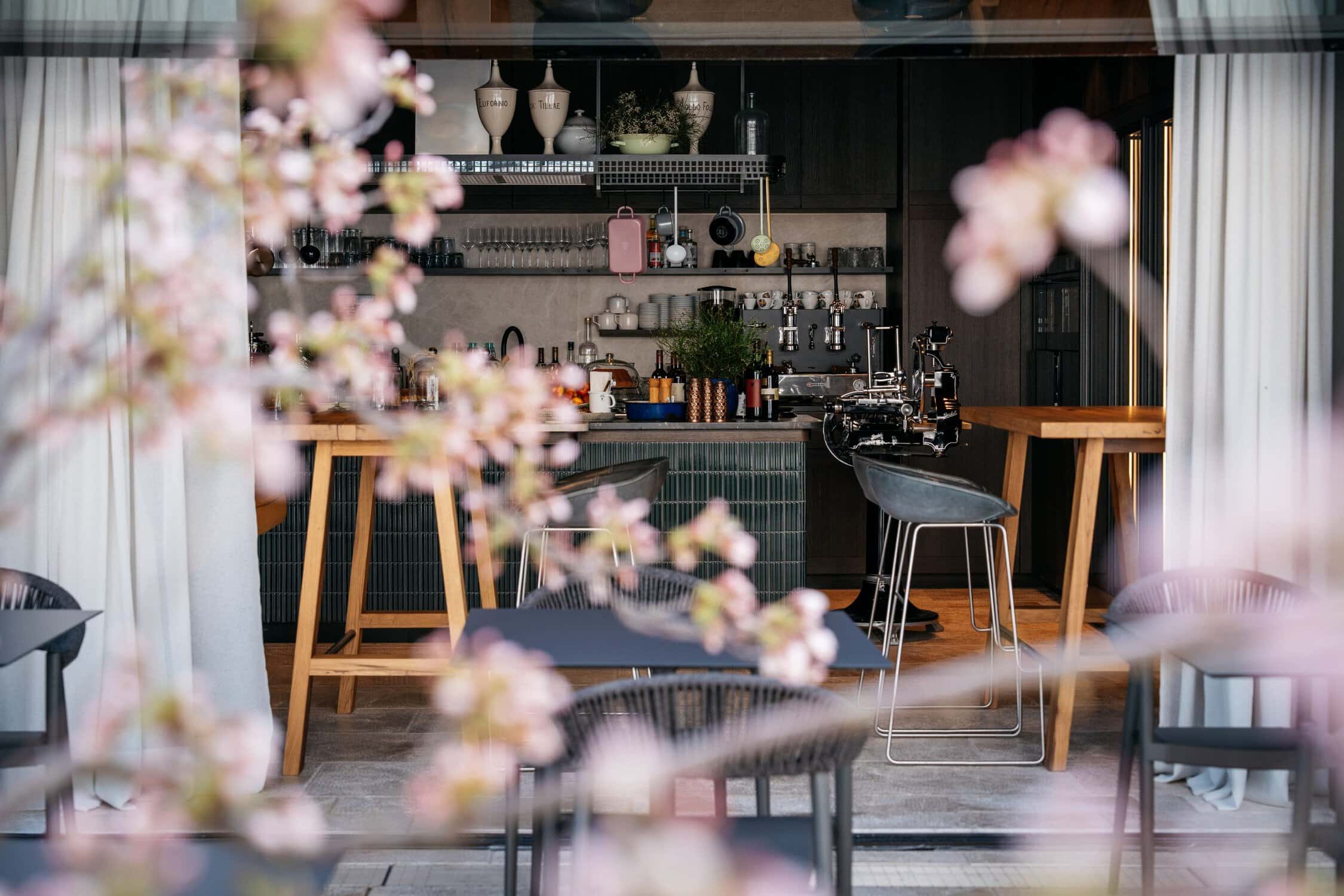
Certainly also those who stood in the entrance area beneath the still-preserved vault, waiting for their rooms or a meal. The former pavilion and winter garden now house the restaurant. The room layouts also follow those that existed before.
The heart of the house
But the history of the house is most tangible in the parlor, carefully restored by Joachim and Heinz. It begins with the scent of times gone by and leads the gaze upward – to the carved wooden beam bearing the number 1661.
Photos: Gregor Hofbauer